I'm sorry but this page is
not yet translated.
It will be completed by spring 2025 at the latest
Runinskrift
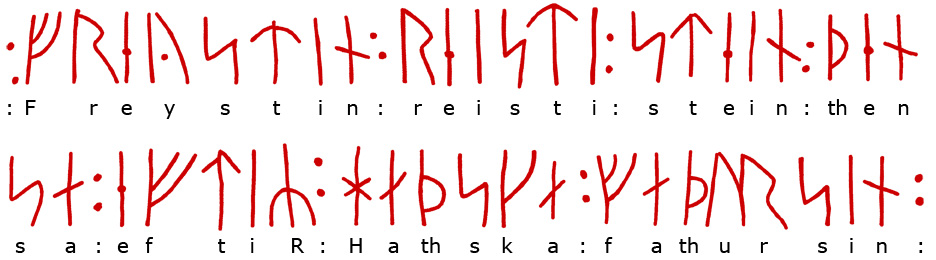
Frösten reste sten den-
na efter Hadska fader
sin
Ornamentik
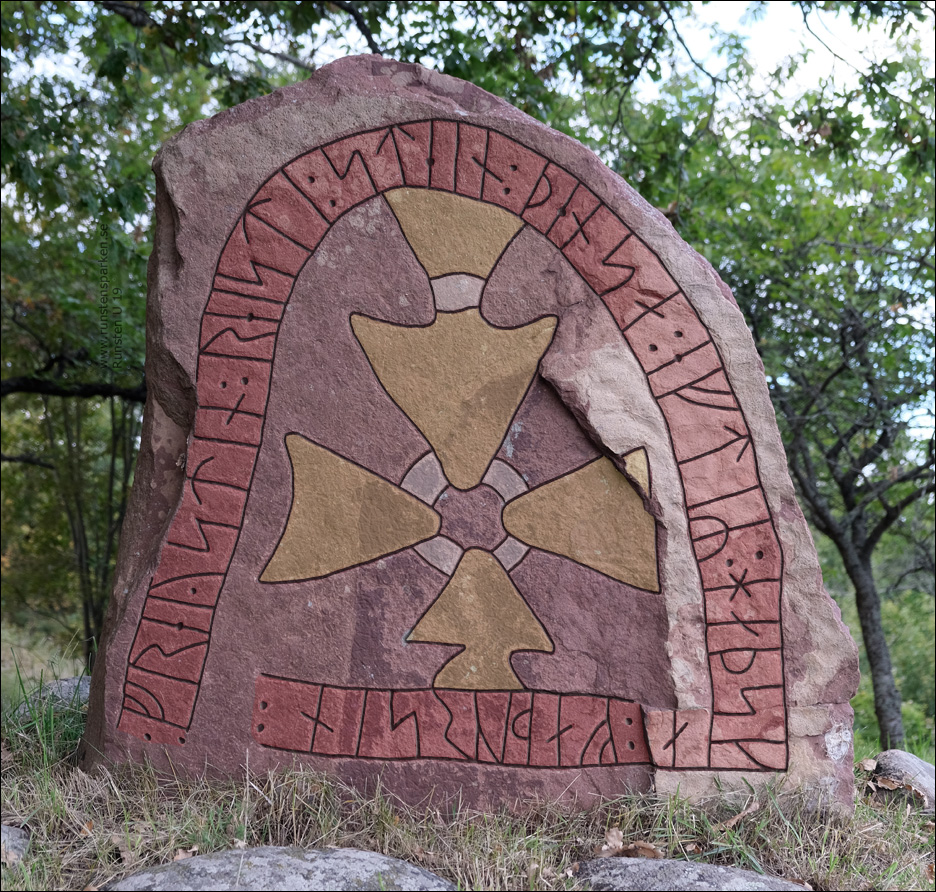
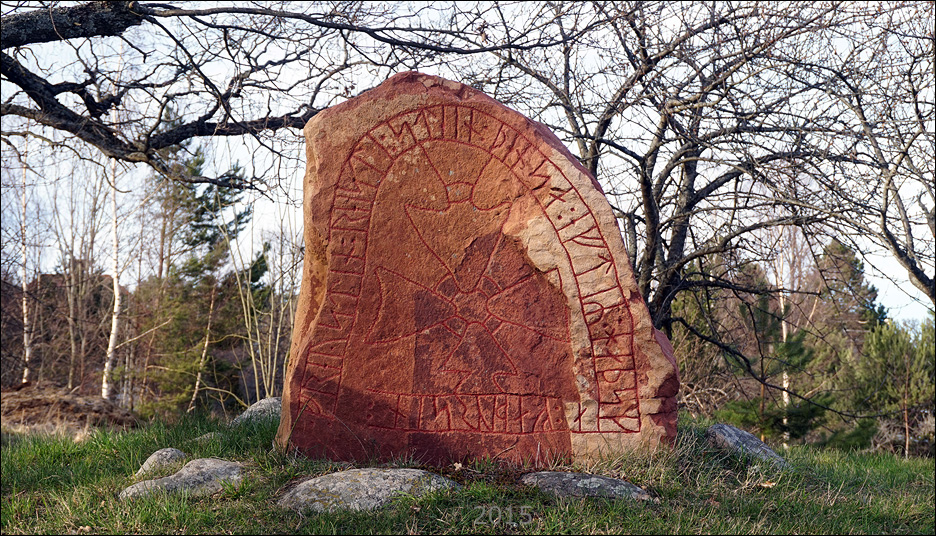
Röd sandsten 125 x 100 cm.
Runstenen är osignerad och runristaren är för mig okänd. På
RAÄ webbsida Runor tillskrivs den Torbjörn 2
Ornamentiken består egentligen bara av ett stort kors som i
sin tur är dåligt planerad och sitter osymmetriskt på
runstenen. Runornas ojämna mellanrum (någon gång till och
med på varandra) tyder också på dålig planering.
Flera av runorna är stungna (prick i för att bestämma
ljudet bättre) vilket tyder på att runstenen är ristad
tidigast under senare delen av 1000-talet.
Historik
Runstenen hittades 1868 i jorden
nedanför en berghäll på Älbys gärde strax norr om
landsvägen. Den ursprungliga fyndplatsen och kullen den står
på nu skulle kunna vara samma men det är osäkert. Säkert är
att runstenen ursprungsplats är här eller i dess närhet.
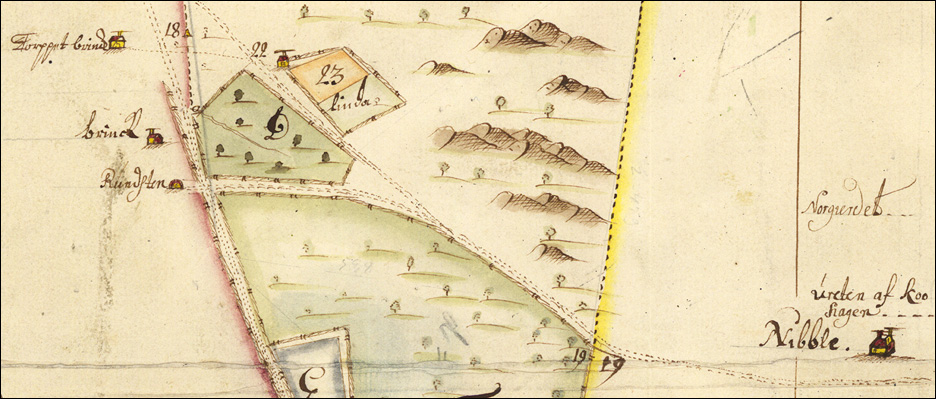
Men på en karta från 1706 finns en runsten
utmärkt på kartan ungefär där den står rest i dag... eller
är det den försvunna U 16 som vi ser på kartan?
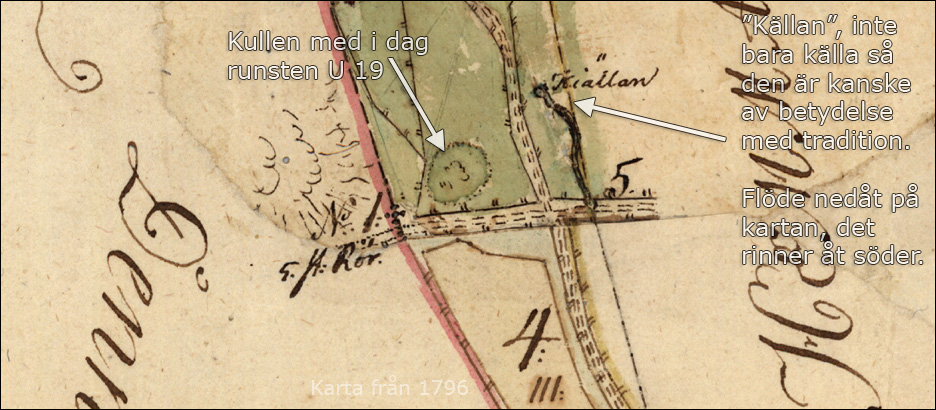
På karta från 1796 är kullen inramad och
källan utmärkt. Här möts 4 ägor Nyckelby, Älby, Sundby
och Nibbla. Det här borde ha varit en bra mötesplats under
äldre tid, kanske som en tingsplats?
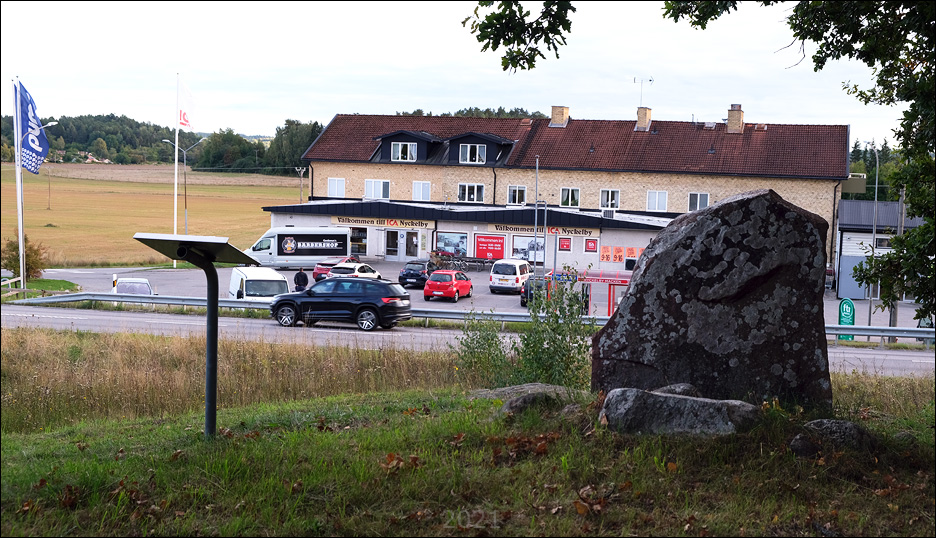
Runstenen är vänd mot söder.
Tips!
Parkera vid ICA Nyckelby och inhandla en picknick som sedan
kan avnjutas vid runstenen eller i Nyckelbys stora gravfält.
Länkar
Upplands runinskrifter > Sidan
28
Runor > Riksantikvarieämbetet
Google map > Hitta till runstenen
kalle@runristare.se
If you want to be of help or have a question.
ALL
RUNESTONES
Ekerö
municipality
ADELSÖ >
has 5
known runestones
BIRKA >
has fragments from 9 known
runestones
MUNSÖ >
has 3 or
4 known runestones
EKERÖ >
has 11 known runestones
FÄRINGSÖ
>
has 27 known runestones
LOVÖ >
has 8 known runestones
|