I'm sorry but this page is
not yet translated.
It will be completed by spring 2025 at the latest
Runinskrift
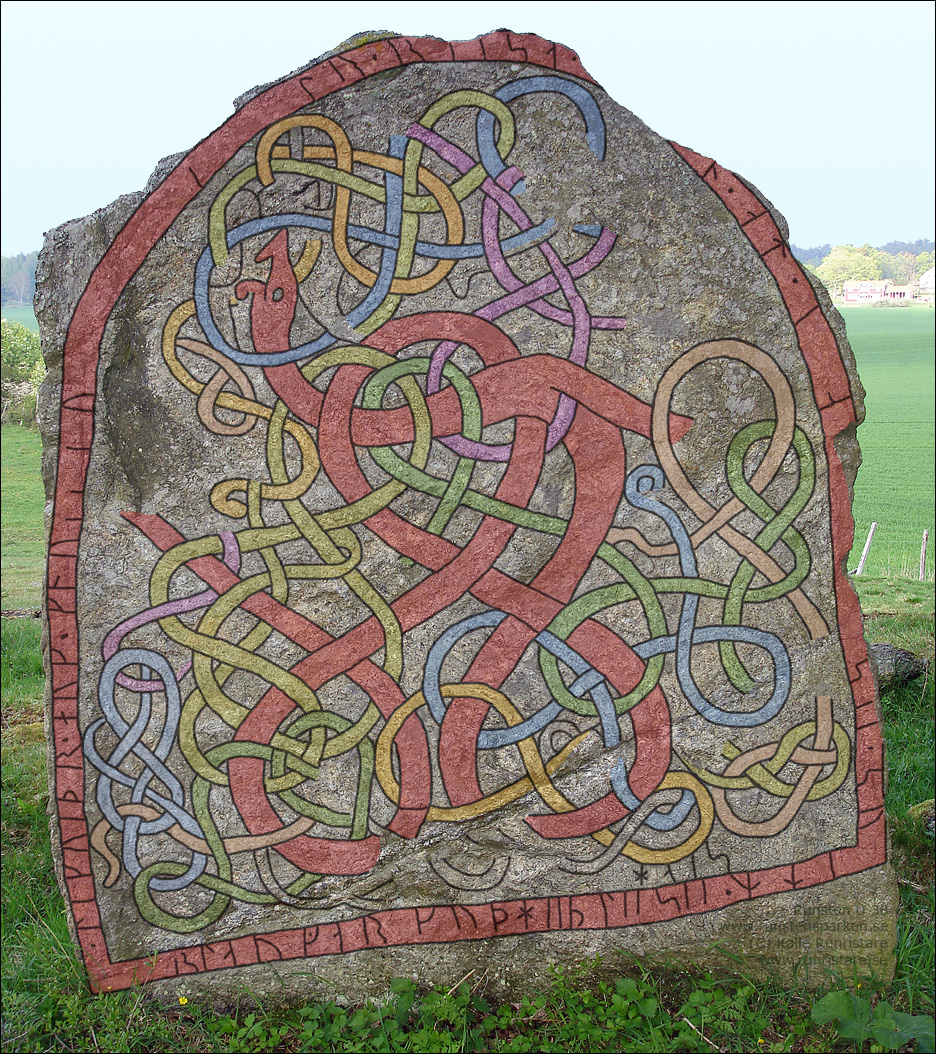
Likvid och Knut . . . lät resa stenen
efter . . . sin . . ., Gerlögs man.
Gud hjälpe själen hans.
· likuiþr - auk · knu - . . . tu · r -
- sa · . . . n at · u . . . si - bu - - ta . . . . rlaugar
· kuþ hiebli - sal ha - s
Historik
Storlek: bredd 1,9 m
och höjd 2,65
Så länge man vet har
runstenen legat i sluttningen åt öster med ristningen uppåt.
År 1937 restes den igen.
Ytan är hårt sliten, ojämn
och knottrig. Tolkningen av ornamentik och runor är på många
platser osäker, ibland helt borta. Bl.a. är min introbild
överst ofullständig på grund av detta.
I runinskriften omnämns "..?.. Gerlögs man" vilket är
intressant. Tyvärr har hans namn gått förlorat men han var
nog inte särskilt känd i slutet på 1000-talet ändå eftersom
namnet behövde förtydligas med "Gerlögs man"...
Hela Tingsplatsen tillhörde nog området Hilleshög och under
en tid Gerlög. Den andra runstenen, U 37 är ristad av
Torbjörn skald som även ristat Gerlögs mäktiga runhäll vid
Hilleshög och verkar vara familjens runristare av tradition.
Runristare:
Balle?
Balle har en förkärlek att
täcka hela ristningsytan som just denna runsten. Han har
även tillskrivits den förlorade runstenen U 2 vid Adelsö
kyrka.
Även om det i dag inte går
att se ornamentik och runinskrift tydligt och inte heller en
eventuell signatur av Balle så är det ändå troligt att det
är ett av hans verk vi ser framför oss på Tingsplatsen.
Kalle tänker till:
Min bild överst är
ofullständig och har nog felaktigheter.
Eftersom runstenen är hårt sliten, detaljer saknas och
ornamentiken är ovanligt svårtolkad så är nog min bild
överst på sidan delvis felaktig, den är i alla fall
ofullständig.
Det var länge sedan runstenen
gjordes ren från lav och mossa men nästa gång det sker
kommer jag passa på att undersöka den extra noga.
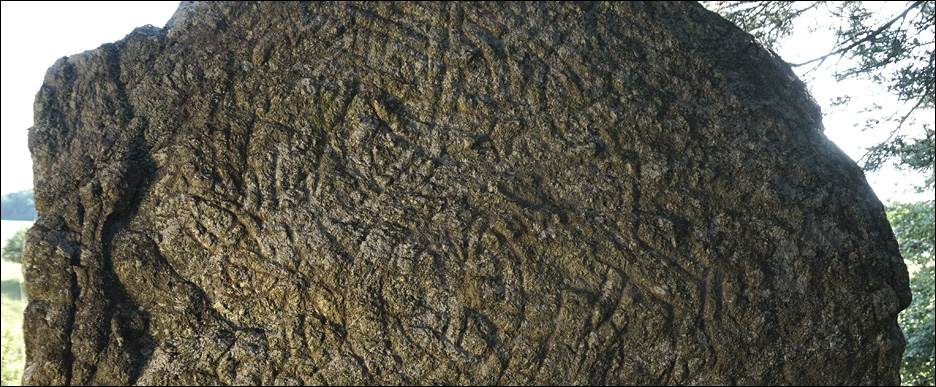
Runstenens skrovliga yta med avancerad
ornamentik
Innan runstenen restes 1937
låg den uppe på några mindre stenar på hällen (se bilden
nedan). Jag tror att runstenen var rest direkt på hällen,
balanserad av mindre stenar som stöttor. När den "föll"
bakåt så gled/rullade den nog på sina stöttestenar och
därför hamnade uppe på dom.
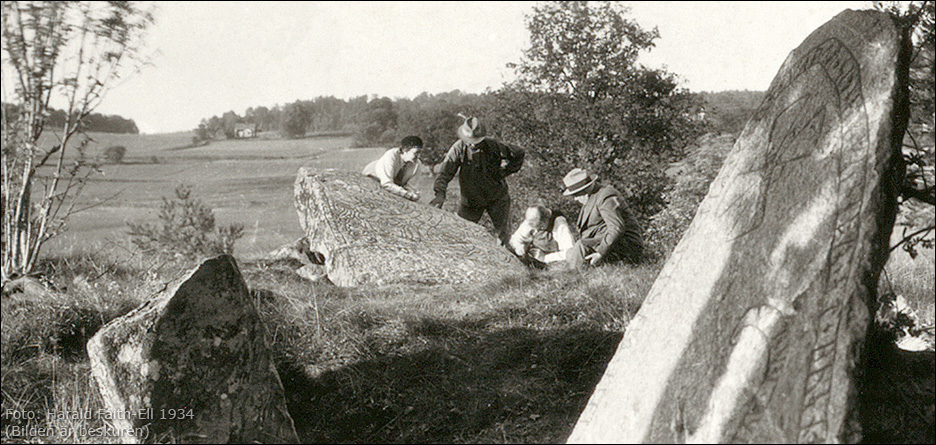
Arkivfoto 1934
Eftersom jordmånen är tunn
och vi vet var runstenen låg före 1937 (se bild ovan) så
borde en enklare undersökning kunna ge oss några av de
saknade fragmenten från stenens kanter. Dessa skulle i sin
tur kunna hjälpa oss att tyda lite mer av runinskriften...
Länkar
Upplands runinskrifter > Sidan
51
Runor > Riksantikvarieämbetet
Google map > Hitta till runstenen
kalle@runristare.se
If you want to be of help or have a question.
ALL
RUNESTONES
Ekerö
municipality
ADELSÖ >
has 5
known runestones
BIRKA >
has fragments from 9 known
runestones
MUNSÖ >
has 3 or
4 known runestones
EKERÖ >
has 11 known runestones
FÄRINGSÖ
>
has 27 known runestones
LOVÖ >
has 8 known runestones
|