I'm sorry but this page is
not yet translated.
It will be completed by spring 2025 at the latest
Om bilden
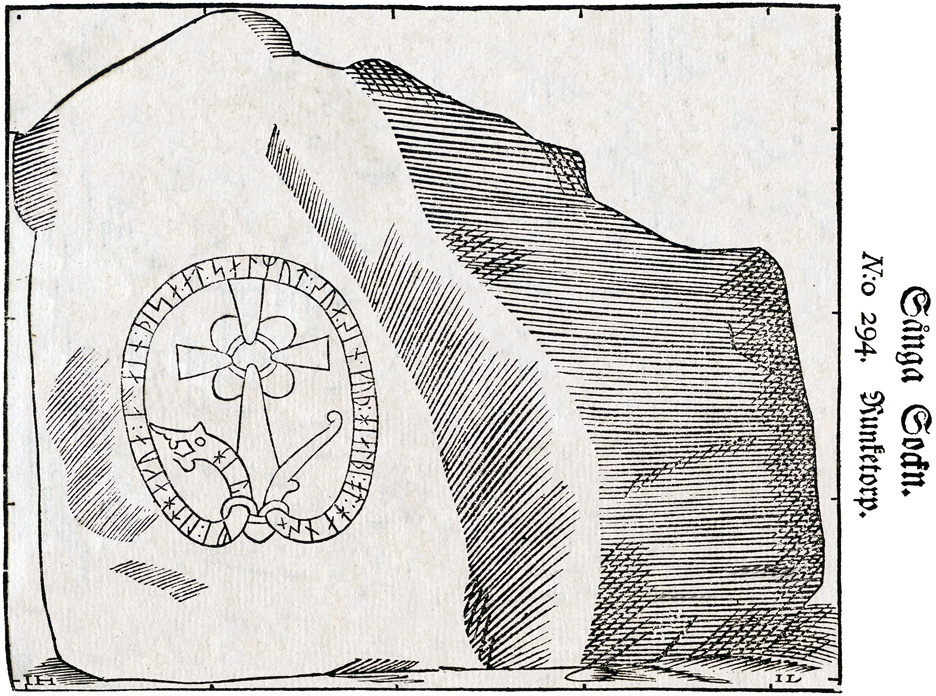
Bilden är från slutet av 1600-talet och är
den enda som finns av den försvunna runristningen.
Bilden finns publicerad i boken Bautil från
1750.
Runinskrift
Helge lät hugga sten denna åt Salmund, son
sin.
Gud hjälpe anden hans
Halki : lit hakua : s-ain : þisa · at
· Salmut : sua · sin ·
kuþ : hialbi : ot : hans ×
Hitta runristningen!
Runristningen finns på ett
stenblock eller berghäll i Torslundas område på 1600-talet
vilket är ganska stort. Torpet Runketorp verkar vara
försvunnet redan på 1700-talet.
(eller kan torpet fått ett nytt namn?)
Ordet "runka" betyder skaka,
ruska eller gunga. I det här fallet bör det vara något vid
torpet som har dessa egenskaper som tex. ett stort stenblock som
det går att få i rörelse eller gunga på.
Sumprunkare var den
som satt och gungade båten med sumpar där det fanns levande
fisk. Genom att gunga (runka) båten syresattes vattnet och
fisken höll sig levande och färsk. Sumprunkandet utfördes vanligen vid
marknadsplatser som Gamla stan där färsk fisk såldes av
fiskare från Mälaren.
Kalle funderar...
Kan det ha funnits en plats med ett torp på Torslundas ägor
där samma typ av sumprunkare höll fisken levande redan före färden
till stan och marknaden, en sorts uppsamlingsplats som fick namnet Runketorp?
I Upplands runinskrifter kan man läsa anteckningar från
slutet av 1600-talet om runristningen:
"Ristningen finns på ett berg vid Runketorp i Gårdslidret"
(uthus/förråd). Senare sägs den finnas "vid Runketorp i
Sånga socken" och en annan anteckning säger "ad
villain Thorslunda" som borde betyda "vid Torslunda gård
eller i "på Torslundas ägor.."?
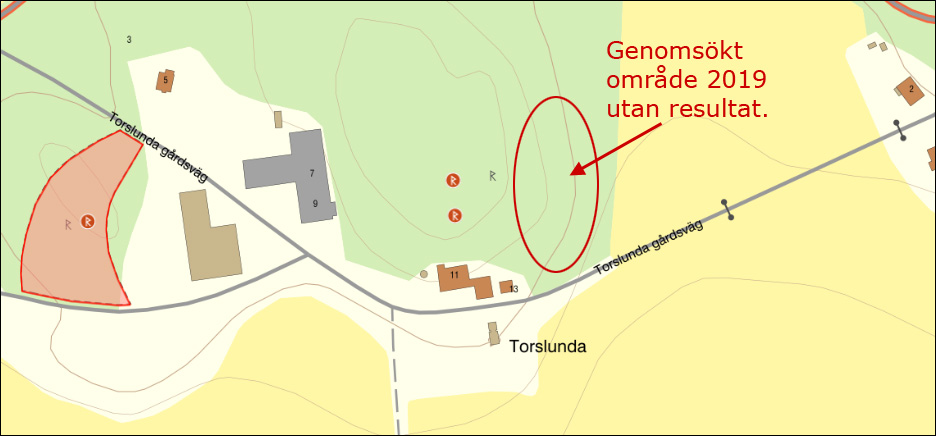
Torslunda gård finns kvar och
tillsammans med den hjälpsamma ägaren undersökte jag och
Roger Wikell en utpekad och lovande bergsbrant nordöst om
gården våren 2019 men utan resultat.
Här finns torpet!
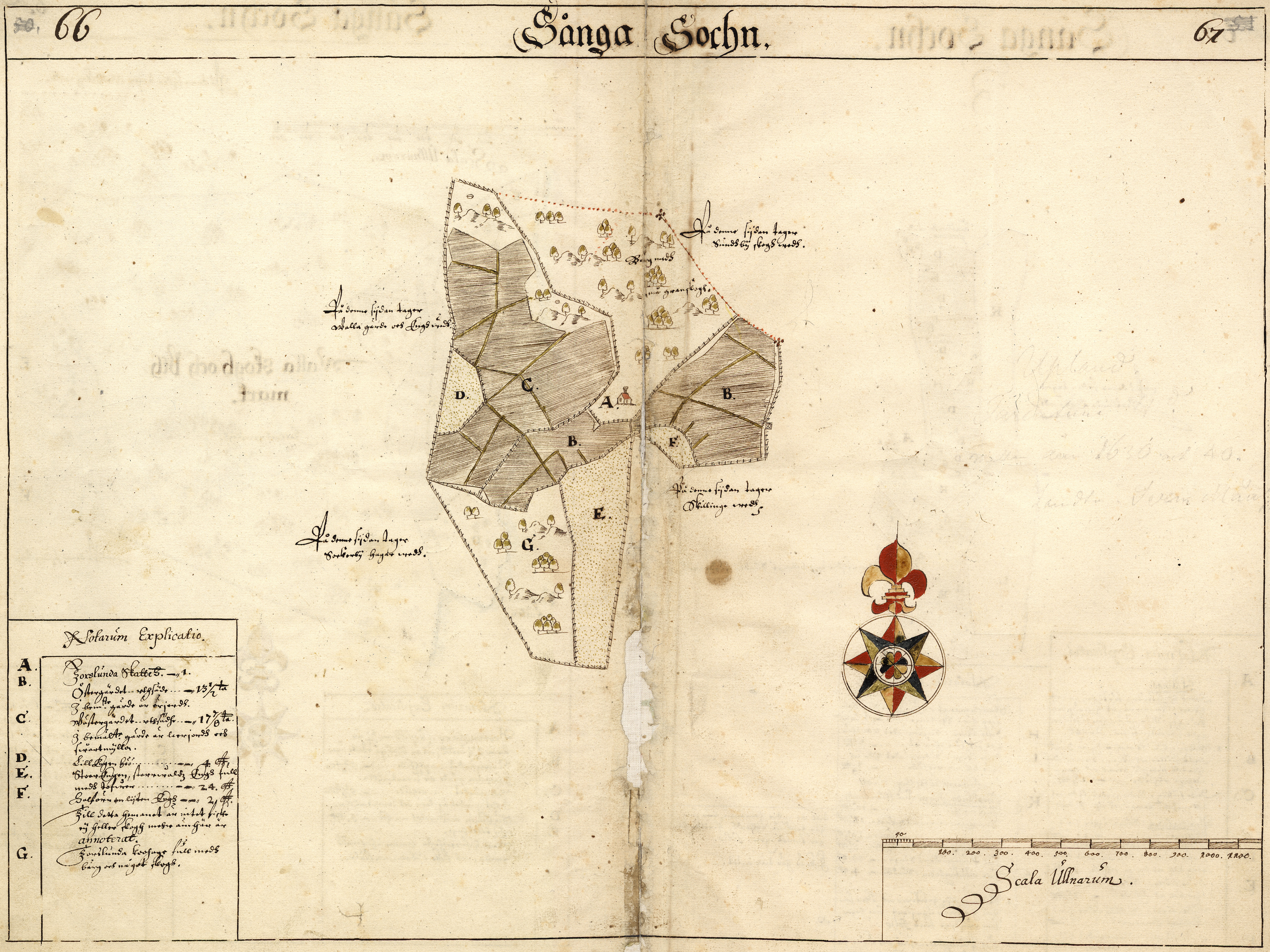
På denna karta från 1630 över
Torslundas ägor finns Runketorp... men torpet inte utmärkt
vad jag kan se och läsningen är inte lätt men torpet finns
där någonstans...
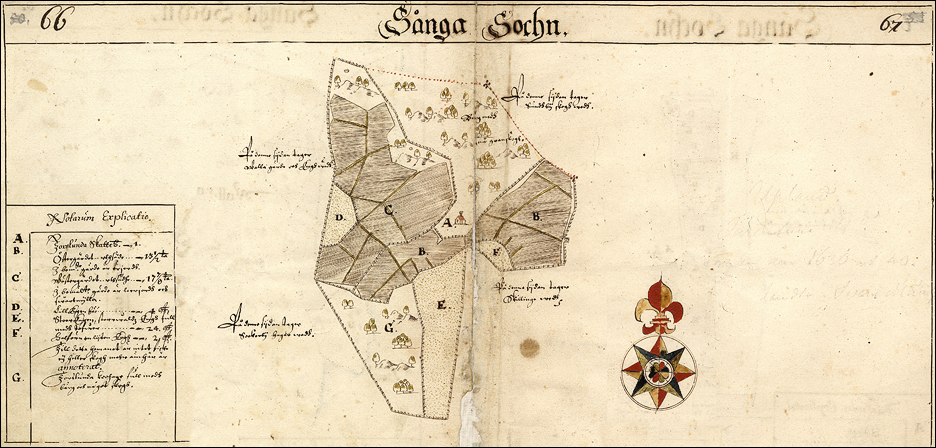
Vill du studera kartan i full
upplösning (18 MB) så kan du
hämta den här >
Runristare: ?
Vem högg runstenen vid
Runketorp?
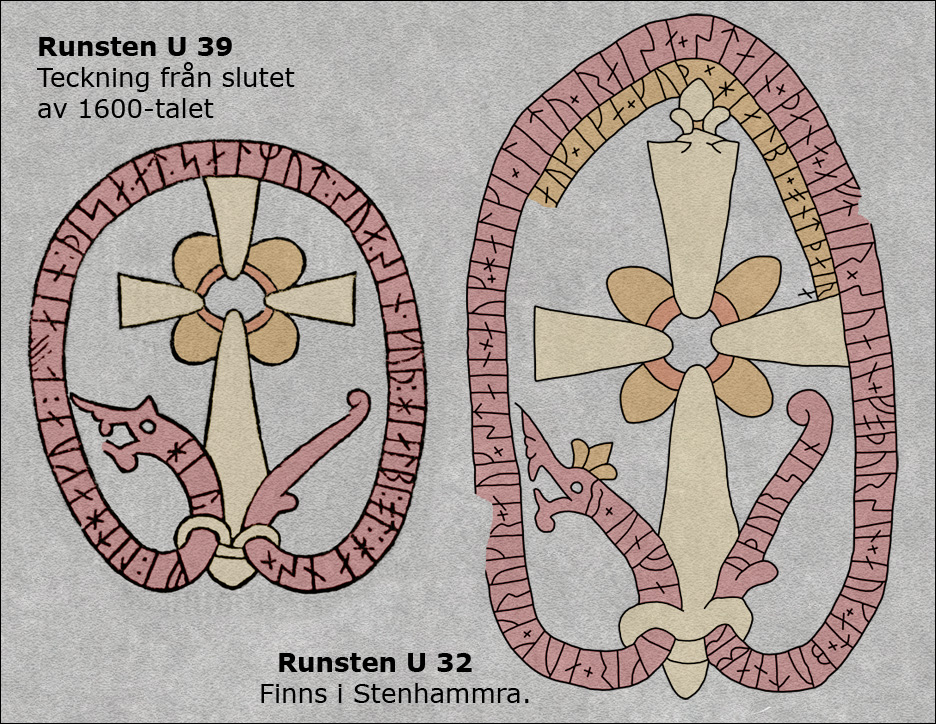
Jämför
Vid jämförelse av detaljerna
på runstenarna U 39 och U 32 är det ganska lätt att se att
det är samma runristare som huggit båda två. Samma runristare har
nog huggit fler runstenar i Ekerö kommun.
Länkar
Upplands runinskrifter > Sidan
52
Runor > Riksantikvarieämbetet
Google map >
Osäker plats?
Någonstans i detta område men med flera kilometers radie bör
runstenen finnas.
kalle@runristare.se
If you want to be of help or have a question.
ALL
RUNESTONES
Ekerö
municipality
ADELSÖ >
has 5
known runestones
BIRKA >
has fragments from 9 known
runestones
MUNSÖ >
has 3 or
4 known runestones
EKERÖ >
has 11 known runestones
FÄRINGSÖ
>
has 27 known runestones
LOVÖ >
has 8 known runestones
|