I'm sorry but this page is
not yet translated.
It will be completed by spring 2025 at the latest
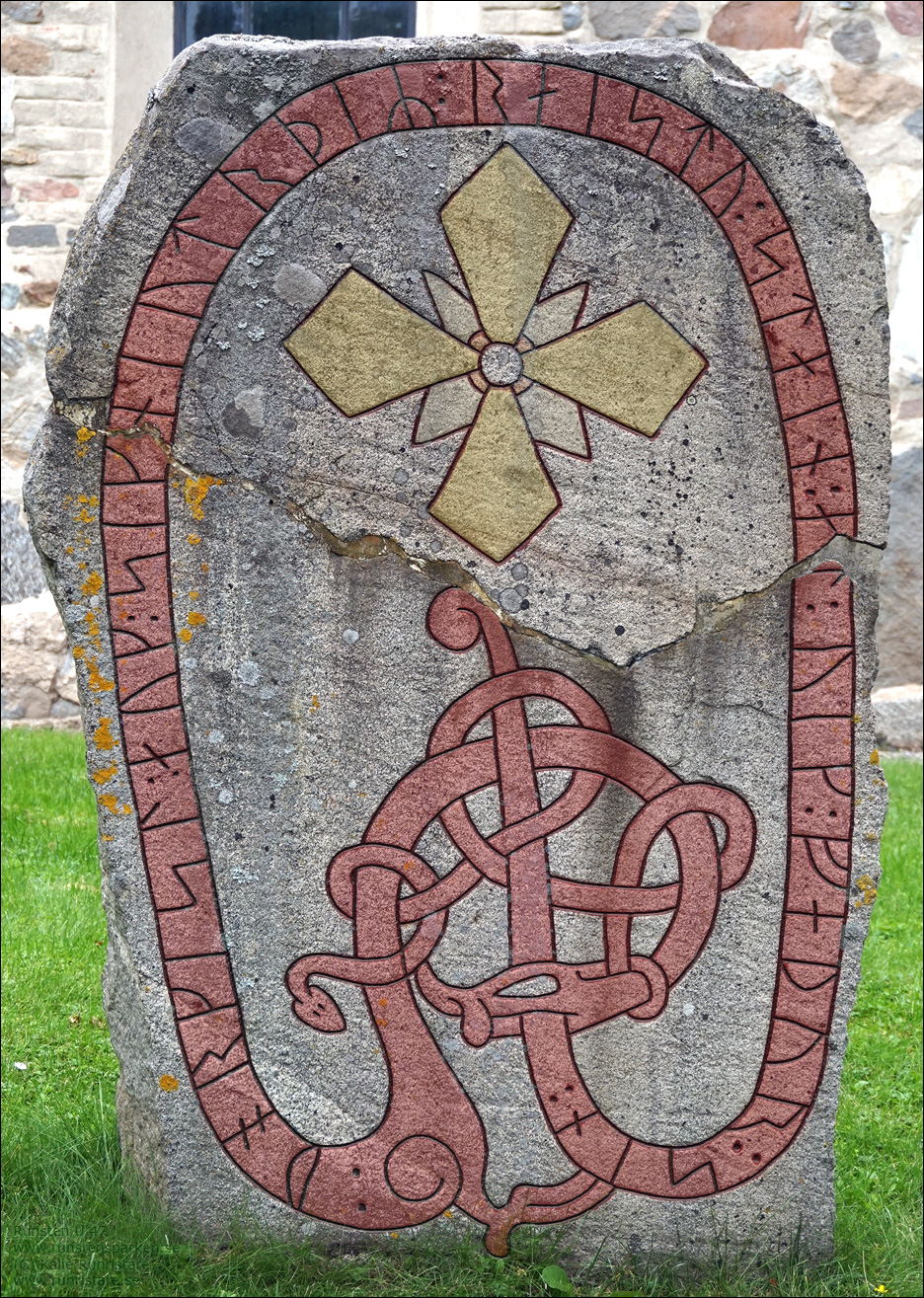
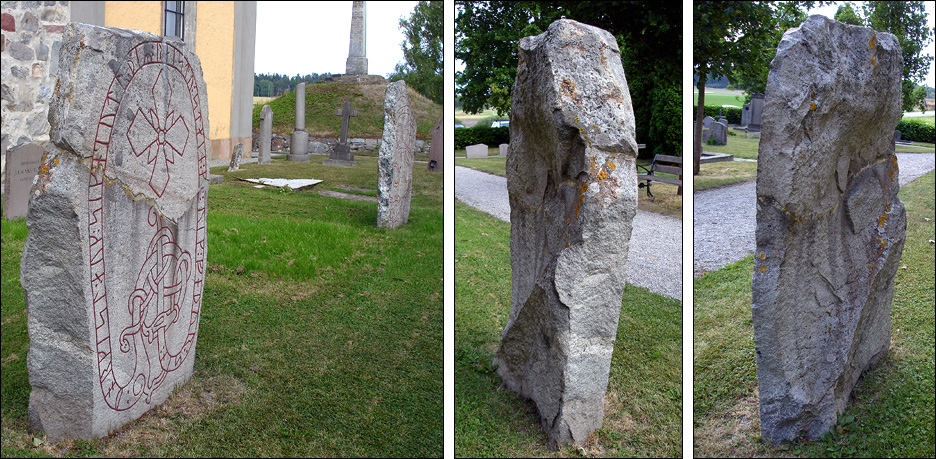
Runinskrift
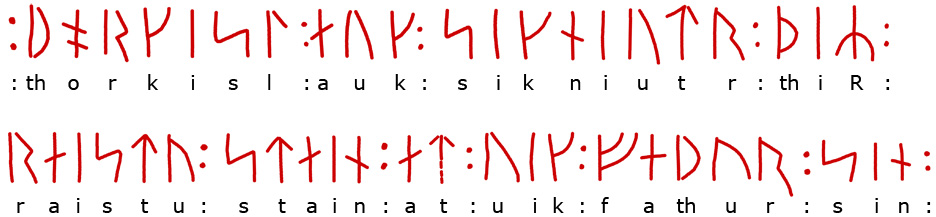
Torgils och Signjut de
reste stenen åt
Vig, fader sin.
Runristare:
Ärnfast
Fakta
Finkornig granit.
Storlek: 175 x 100 cm.
Historik
Runstenen användes länge som byggmaterial i kyrkans grund
och syntes bara delvis över markytan. I mitten på 1800-talet
togs den ut och flyttades till Drottningholm ca
500 meter VSV om slottet. År 1952 flyttades den tillbaka
till Lovö kyrka till den plats där den står i dag.
Ornamentik
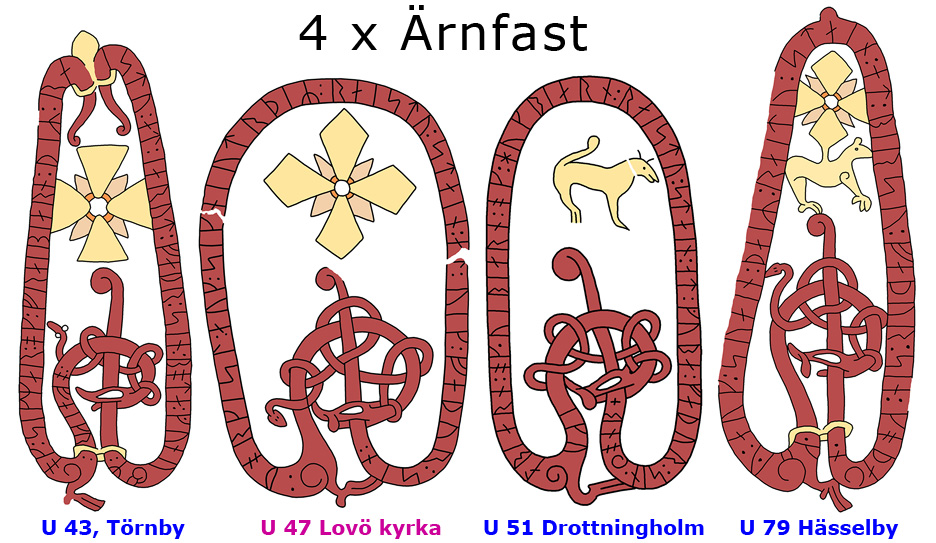
U 47 har en välplanerad
ornamentik av Ärnfast som nu har blivit trygg med sitt hantverk.
Drakens nacktofs låter han förvandlas till orm, en
konstnärlig frihet han använder på flera av sina runstenar.
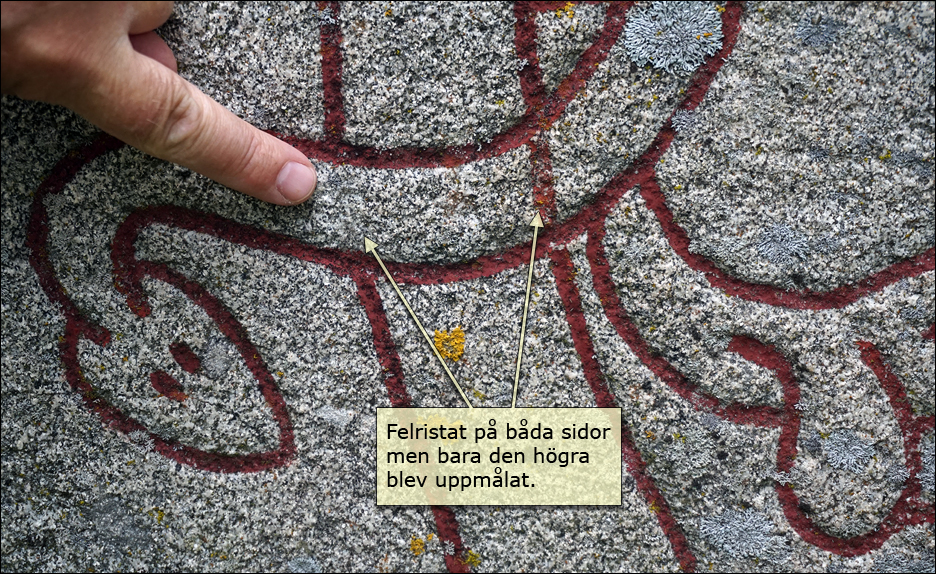
Men trots god planering blev
det ändå fel när U 47 ristades. Nacktofsen/ormens flätning
över och under blandades ihop vilket måste ha förstört minst
en hel dags gott humör. Men när den färdiga runstenen sedan
målades upp så målades bara de rätta huggspåren... inte som
vi gör i dag, vi målar alla huggspår, även de felaktiga.
Länkar
Upplands runinskrifter > Sidan
62
Runor > Riksantikvarieämbetet
Google map > Hitta till runstenen
kalle@runristare.se
If you want to be of help or have a question.
ALL
RUNESTONES
Ekerö
municipality
ADELSÖ >
has 5
known runestones
BIRKA >
has fragments from 9 known
runestones
MUNSÖ >
has 3 or
4 known runestones
EKERÖ >
has 11 known runestones
FÄRINGSÖ
>
has 27 known runestones
LOVÖ >
has 8 known runestones
|