I'm sorry but this page is
not yet translated.
It will be completed by spring 2025 at the latest
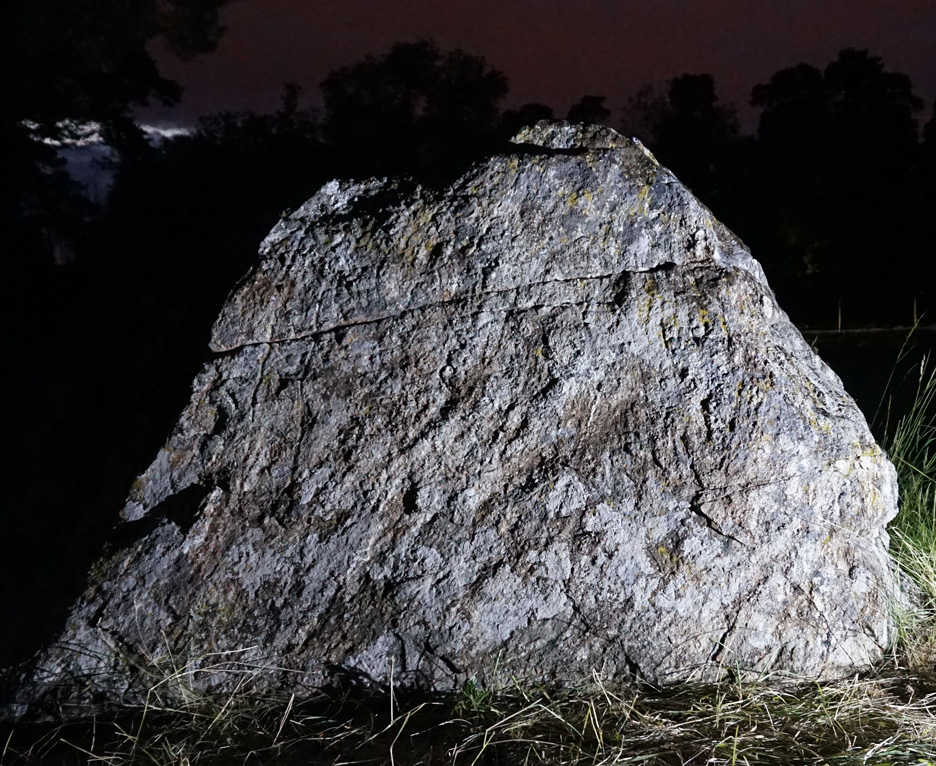
Runinskrift:
?
Runstenen var i så dåligt skick att en djupgående rengöring uteslöts.
Det fick bli en mer långsam rengöring med stark sprit som
torkar ut
och dödar laven som därefter långsamt faller bort.
Vad jag vet har inget nytt försök efter
upptäckten gjorts för att tyda och tolka ornamentik och
runinskrift. Men en tidig vårmorgon 2024 kanske kan ändra på
den saken, vi får se.
Historik
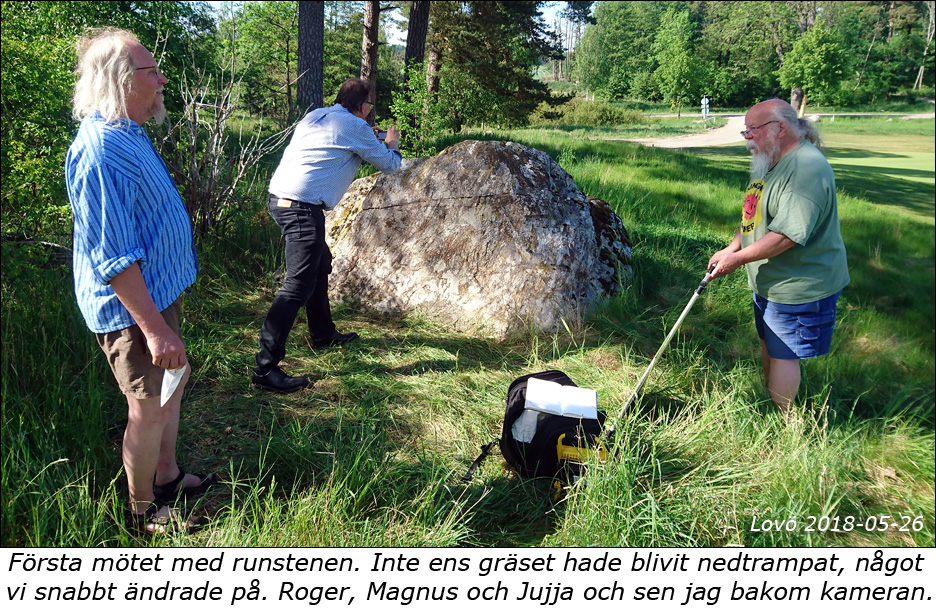
Så upptäcktes runstenen
Någon i runstenens närhet passerade den i
exakt rätt ögonblick en tidig försommarmorgon då solen lös
från sidan över stenens yta samtidigt som alla huggspår
ännu låg i skugga (naturligt släpljus).
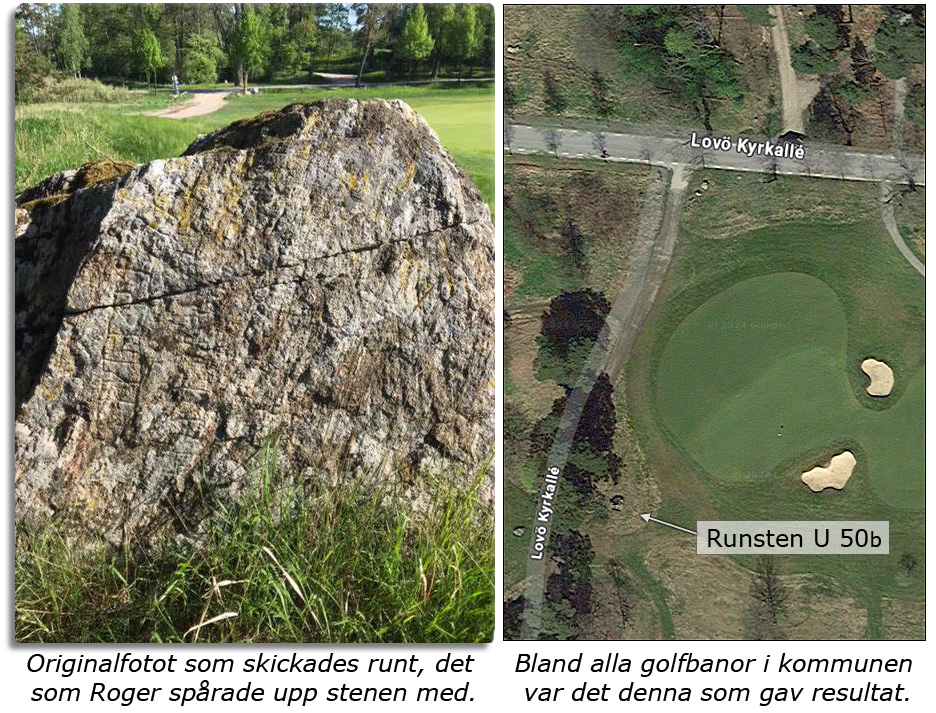
Han tog en bild och skickade den till någon
med frågan om den var känd sedan tidigare. Denna någon
skickade bilden vidare och frågade samma sak och när den kom till mig
insåg jag att det var ett nyfynd.
Men var fanns runstenen?
Den hemliga upptäckaren som ville vara
anonym gick inte att kontakta men att runstenen fanns
någonstans i Ekerö kommun hade i alla fall kommit fram från
första början.
På bilden syntes en väg och en bit kortklippt
gräsmatta, en golfbana. Jag skickade bilden till Roger
Wikell som olyckligtvis befann sig i norra Sverige på en
arkeologisk utgrävning. Trots detta kunde han med en
detektivs listighet, Google maps kartor och med en taxs envishet
klura ut på distans vart runstenen fanns.
Fem dagar senare var Roger tillbaka och
upptäckten var ett faktum, Ekerö kommun hade fått ännu en ny
runsten.
Men den ursprungliga och observanta upptäckaren
är fortfarande anonym, i alla fall för
mig 2024.02.04.
Länkar
Sveriges Runinskrifter > Sidan
5
Runor > Riksantikvarieämbetet
Google map > Hitta till runstenen
kalle@runristare.se
If you want to be of help or have a question.
ALL
RUNESTONES
Ekerö
municipality
ADELSÖ >
has 5
known runestones
BIRKA >
has fragments from 9 known
runestones
MUNSÖ >
has 3 or
4 known runestones
EKERÖ >
has 11 known runestones
FÄRINGSÖ
>
has 27 known runestones
LOVÖ >
has 8 known runestones
|