I'm sorry but this page is
not yet translated.
It will be completed by spring 2025 at the latest
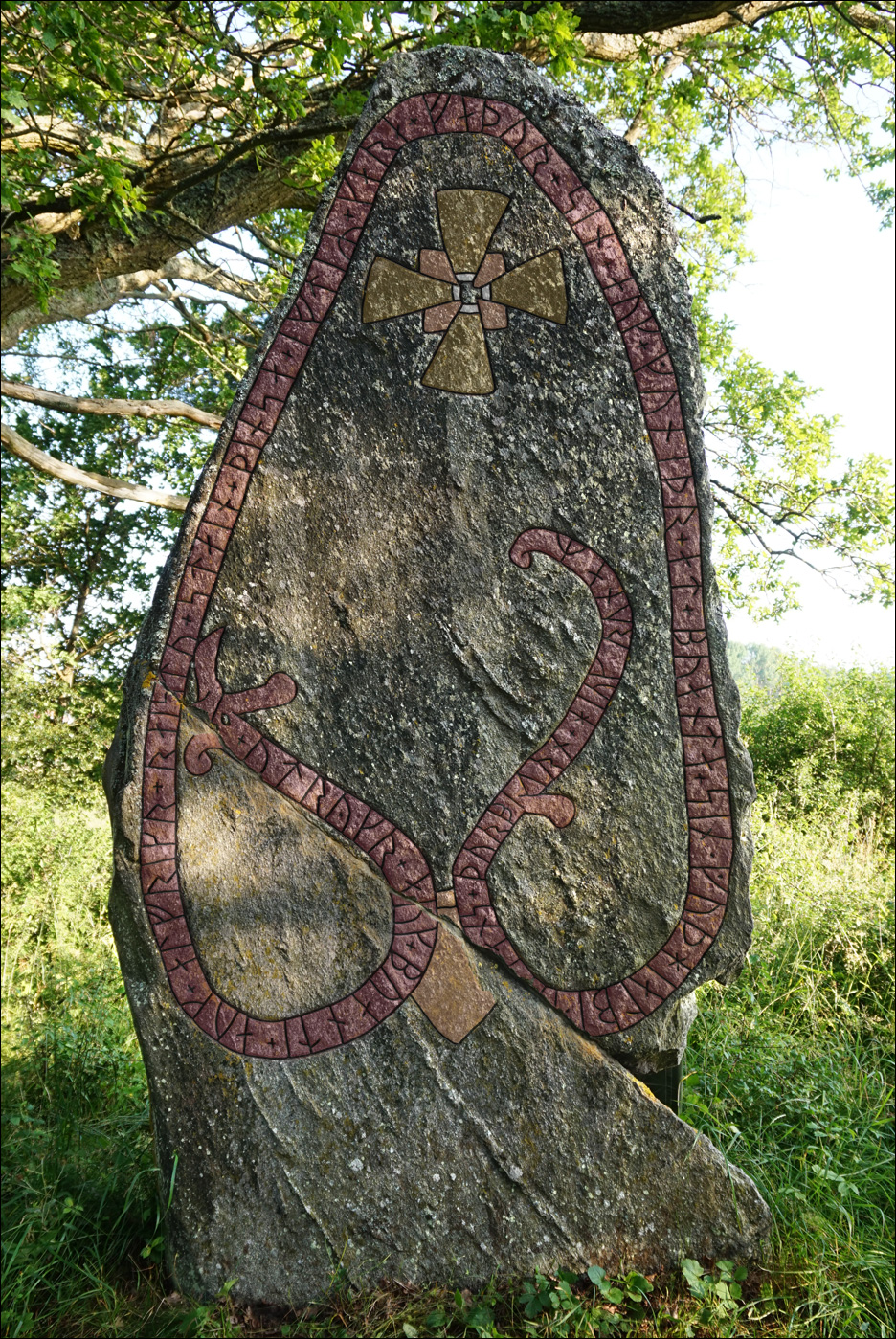
Runinskrift:
Otrygg och Bonde och Alvrik reste sten denna
efter Kåre fader sin och Gunned efter bonden sin (sin
man).
Gud hjälpe anden hans.
Torbjörn högg runorna.
+ Utrykr + auk + Buanti + auk +
Alfrikr + raistu + stain + þinsa + eftiR + Kara + faþur +
sin + auk + Guneþr + at + buanta + sin ·
Guþ hialbi (a)-- -ans
+ þurbiurn + hiuk ' runaR
Runristare:
Torbjörn skald
Samma Thorbjörn som ristat
U 29 Gerlögs runhäll,
U 24 i
Hilleshögs kyrka och U 15b i Ekerö kyrka. Enligt "Runor"
även U 20 i Färingsö
kyrka.
Om Thorbjörn skald
Thorbjörn skald var nog en
egensinnig runristare som tyckte det var lättare med
skaldekonst än at skapa vacker ornamentik, hårt huggen i granit. På
den här runstenen U 37 ser vi tex. hur Thorbjörn normalt gör sina
drakhuvuden.
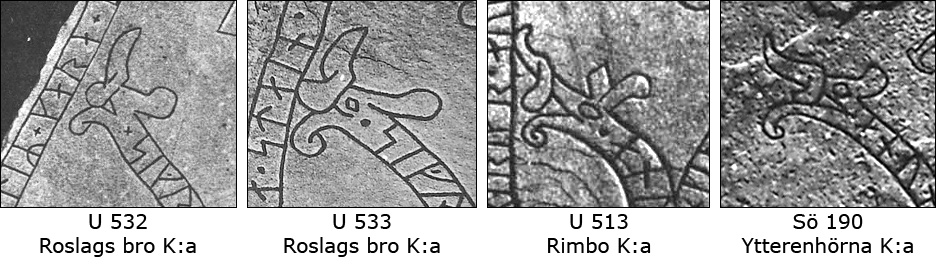
En annan detalj som visar på Thorbjörns egensinnighet är
kopplet mellan hals och stjärt. På Thorbjörns runstenar är
de inte bojade ordentligt, bara pålagda lite som en lös
markering.
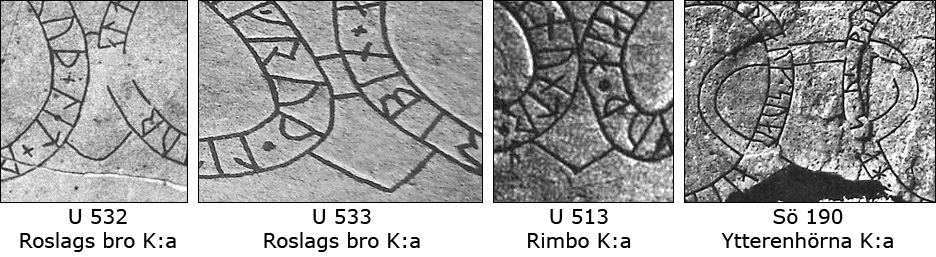
Ett undantag skulle kunna vara Gerlögs runhäll
U 29 som har en
avancerad ornamentik med två drakar som flätas samman på ett
korrekt sätt och har extra fina detaljer som huvud och
tassar.
U 29 är signerad med: Thorbjörn
skald ristade runorna.
Jag tror absolut att
Thorbjörn har ristat runorna på U 29 och även skapat
själva inskriften eftersom han kallar sig för "skald" men
jag tror inte att Thorbjörn har skapat
ornamentiken!
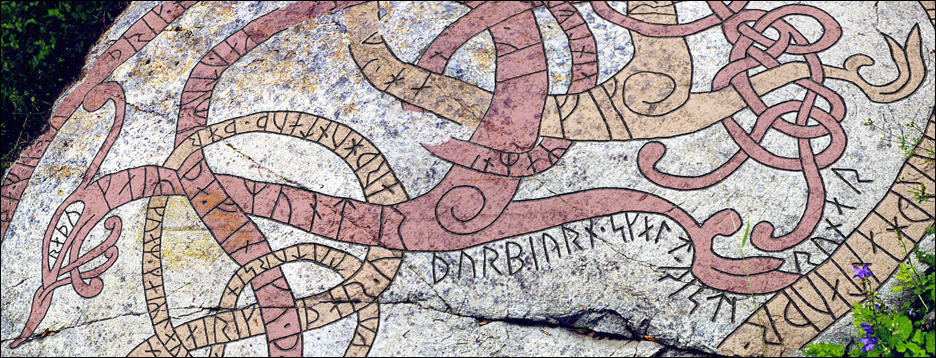
Ornamentiken på U 29 är
skapad av en skicklig konstnär som känner till ornamentikens
lagar och regler, en konstnär som kanske inte ens ristade i
sten utan arbetade andra material som trä, tyg, ben eller silver.
Jag
gissar att det var Gerlög själv som satte högre krav på Thorbjörns
arbete.
Om Tingsplatsen / Galgbacken
Platsen kallas i dag för
Galgbacken vilket är ett medeltida ord. De båda mäktiga
runstenarna på platsen visar att här har varit något
annat under vikingatid, en tingsplats.
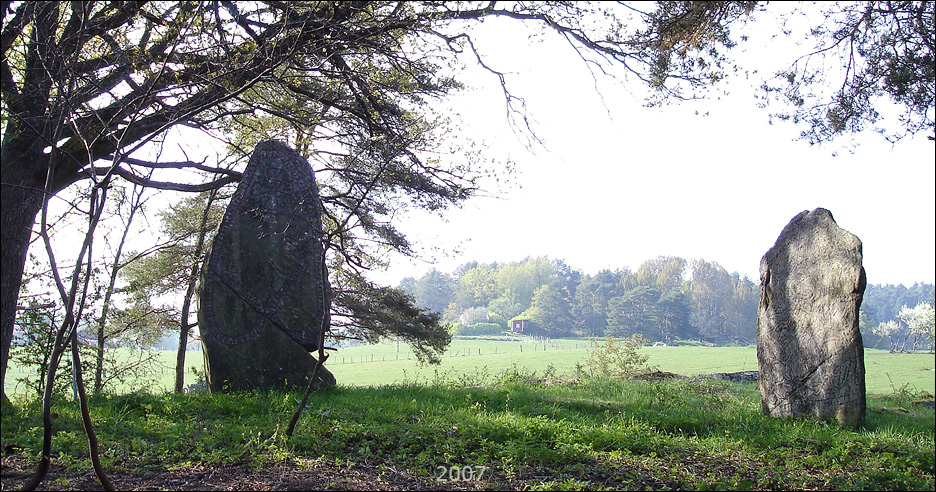
Förutom runstenarna på
platsen så ligger torpet Tingstaden i närheten. Då ordet
stad och ställe har samma betydelse så är
Tingsstaden/Tingsstället direkt kopplad till platsen,
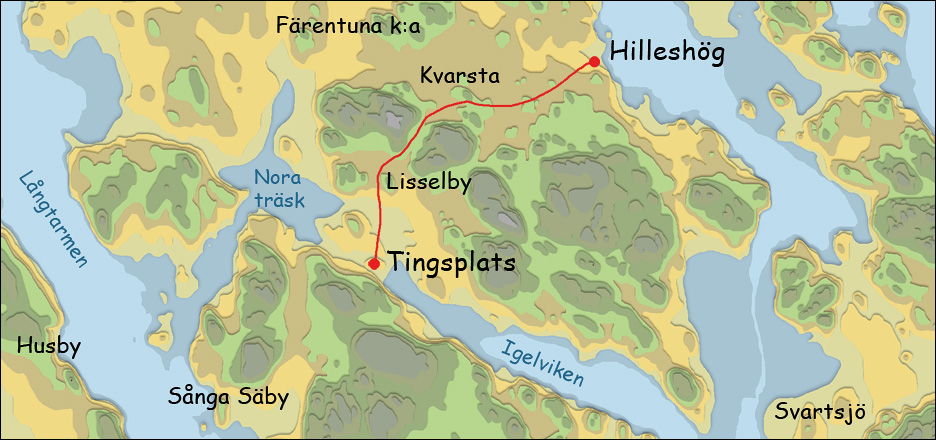
troligen som en mötesplats längst upp i Igelviken som då var
en havsvik som nådde ända fram till Tingsplatsen.
Från andra hållet i norr
kunde man på samma sätt ta sig till Tingsplatsen via
Långtarmen och in i viken som ledde fram till det som i dag kallas Nora
träsk. Där finns i dag vikingatida gravar som hörde
till en gård som i sin tur mycket väl kunde ha varit en mötesplats
för de som kom från norr och nordöst.
Den tredje riktningen blir
mot Hilleshög med den vikingatida gården Lisselby inom synhåll från
Tingsplatsen. Om jag gissar rätt så fanns Tingsplatsens
Vivårdare i Lisselby, den person som vårdade platsen och gjorde
viktiga förberedelser inför Tingen.
Runstensfragmentet
U 37b som
hittades 2015 berättar om någon som vårdar, och kanske var det
just Vivårdaren?
Länkar
Upplands runinskrifter > Sidan
50
Runor > Riksantikvarieämbetet
Google map > Hitta till runstenen
kalle@runristare.se
If you want to be of help or have a question.
ALL
RUNESTONES
Ekerö
municipality
ADELSÖ >
has 5
known runestones
BIRKA >
has fragments from 9 known
runestones
MUNSÖ >
has 3 or
4 known runestones
EKERÖ >
has 11 known runestones
FÄRINGSÖ
>
has 27 known runestones
LOVÖ >
has 8 known runestones
|