I'm sorry but this page is
not yet translated.
It will be completed by spring 2025 at the latest
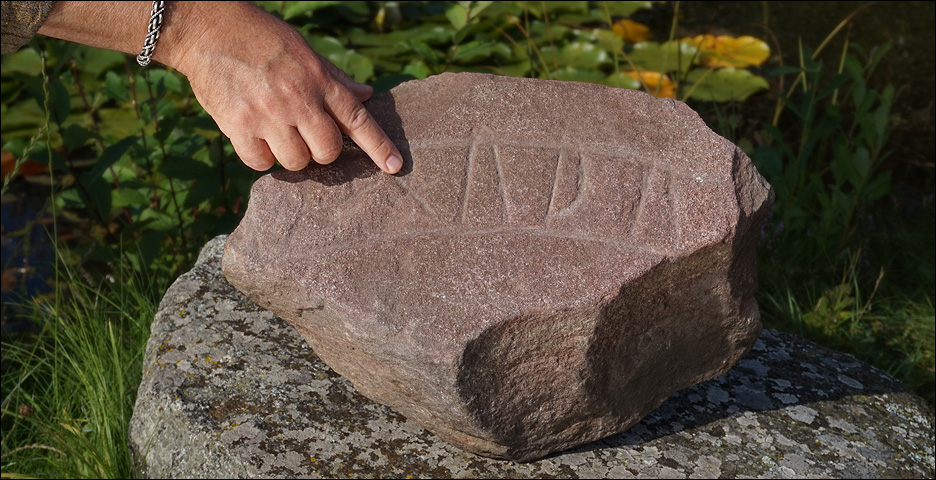
Runinskrift:
f a h u th u
Ordet verkar vara fullständigt,
ett helt ord.
Ordet är unikt och finns inte på
någon tidigare känd runsten. Ordet
verkar inte vara känt i fornsvenskan heller men finns i gotländska
dialekter.
Det Isländska ordet fága ligger nära tillhands som
betyder sköta, pryda, smycka, rensa, vårda, odla, dyrka.
Historik
Hösten 2015 blev jag
kontaktad av en privatperson på Färingsö som sa sig hittat
en bit runsten. Jag har besökt
förmodade runstenar tidigare och det är
oftast redan kända runristningar eller något som naturen skapat.
Men denna gång var det verkligen en runsten, eller
snarare en del av en runsten av röd sandsten. I det huggna
bandet syntes tydligt runorna
f a h u þ u men att tolka dessa
var svårare.
Jag skickade bilder och information till
Magnus Källström på runverket som genast besökte
gården och runstenen. Samtidigt fick jag den preliminära tolkning på
ordet och ordets betydelse som jag beskrivit ovan.
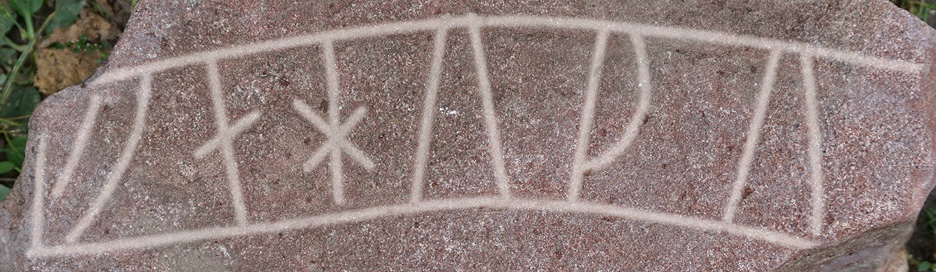 Fyndplatsen som ligger nära
Tingsplatsen och små detaljer på runstenen bäddar för en
riktigt bra berättelse...
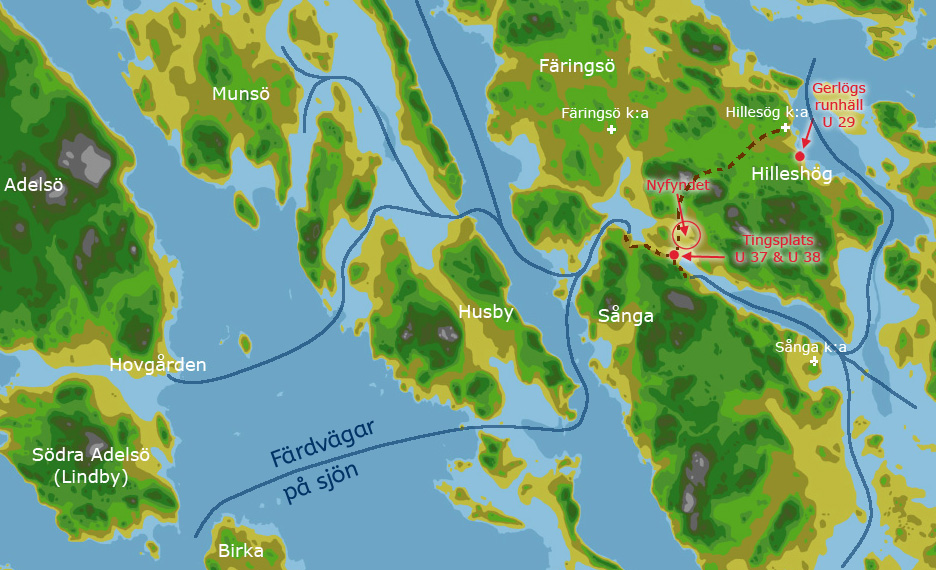 Att runstenen hittades i närheten och inom
synhåll av det som idag kallas för galgbacken (medeltid) men som pryds
av två imponerande runstenar (vikingatid) gör inte tolkningen sämre.
Att torpet Tingsstaden (läs tingsstället) också ligger
intill gör allt ännu mer spännande.
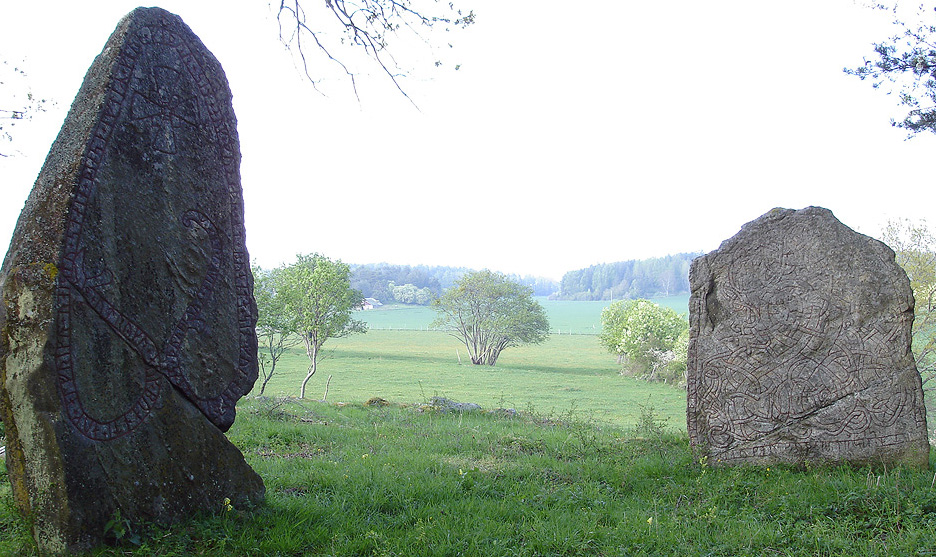
Runstenarna U 37 & U 38 på Tingsplatsen.
Mellan stenarna mot skogen syns gården Lisselby.
Jag tror (om den preliminära tolkningen kvarstår när
runverket släpper sin rapport) att runstenen är rest av
eller till den som var vivårdare av Tingsplatsen, den som
ansvarade för skötsel, vård och förberedelser inför tingen.
Han arbetade i så fall
på uppdrag av dagens Hilleshög.
Båda runstenarna på tingsplatsen kopplas till Hilleshög.
Runsten U37 är huggen av Torbjörn Skald,
han som även högg den
stora runhällen på Hilleshög,
runsten U29, på uppdrag av
Gerlög.
Runsten U 38 sticker
ut från alla runstenar på Ekerö
med en heltäckande ornamentik på en stor portalliknande sten
som mäter ca 2,5 x 2 meter. I den slitna stenens runinskrift kan man inte
längre se ett mansnamn
men det är förtydligat direkt efter med "... Gerlögs man",
troligen samma Gerlög som lät hugga U29 på Hilleshög.
Det nyfunna runstensfragmentet med ordet
F A H U þ U hittades i
närheten av och inom synhåll för Tingsplatsen i riktning mot just Hilleshög.
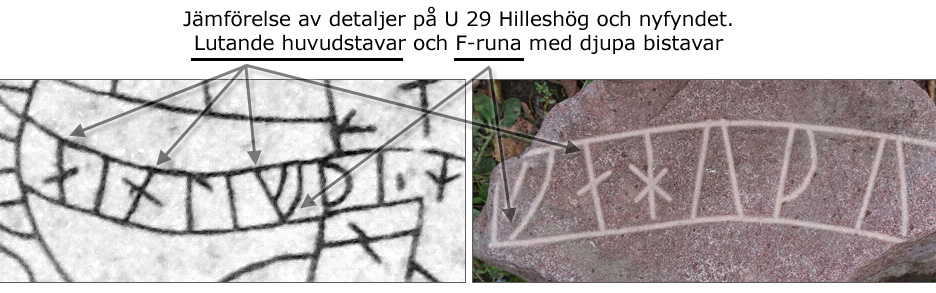
F-runan på det nya fyndet har ovanligt djupa djupa bistavar men har sin
likhet på
hällen vid Hilleshög. Även de lutande
huvudstavarna, typiska för Torbjörn Skald, kan urskiljas på
runstenen. Kan det vara Torbjörn Skald som huggit den nya
runstenen?
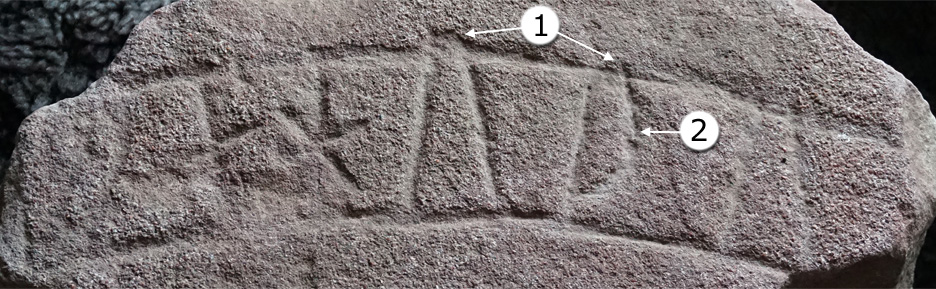
Om det vore Torbjörn som ristat fragmentet så
är det märkligt är att både U och th-runan är
huggna utanför det övre bandet (1).
Även huggspårens djup är ojämna och verkar vara utförda av
någon utan erfarenhet (2).
Torbjörn var en erfaren runristare, han är egensinnig och
självsäker och gör lite som han vill men han hugger inte runor på
detta sätt och det är inte heller motiverat.
En förklaring skulle kunna vara att det är Torbjörn Skald
som designat och målat upp runstenen till någon som var
osäker på ornamentik och runor, någon som sedan fått hugga
själv.
Torbjörn Skald fanns i området
under en längre tid för att hugga runstenarna, U 29 och U
37, då är det möjligt att han inspirerade och hjälpte
vivårdaren att hugga sin egen runsten.
Jag får rysningar när jag lägger ihop alla "pusselbitar"
och ser att den medeltida platsen vi kallar för galgbacken troligen hade en
långt äldre funktion. Kanske får det här fyndet betydelse
för både Färingsö och Ekerös historia om runverkets
förhandstolkning kvarstår när rapporten väl kommer.
Dessutom!
Tingsplatsen (idag galgbacken) ligger
fortfarande i ett kryss av tre socknar, Färingsö, Hilleshög
och Sånga och man kan se alla tre sockenkyrkorna från
Tingsplatsen trots den kuperade terrängen om man tar bort
några uppväxta träd i riktning mot Hilleshög.
Och i framtiden vill jag kunna visa upp
alla de runstenar och runhäll som berörs i den här
berättelsen som fullskaliga avbildningar i Runstensparken.
Besöka runstenen?
Runstensfragmentet är i säkert förvar på
gården men
inte publik.
December 2023 var den fortfarande inte
publicerad i någon rapport fast den är undersökt och den
finns inte heller utmärkt i Fornsök.
Frustrerande lång tid igen.. 7-8 år ?!
Fortsättning följer....
Länkar
Fornsök > Visar Tingsplatsen.
Tingsplatsen är en historisk plats med två stora runstenar,
platsen är väl värd ett besök.
Kalle Runristare > Nästan samma info som här.
Google map > Hitta till runstenen
kalle@runristare.se
If you want to be of help or have a question.
ALL
RUNESTONES
Ekerö
municipality
ADELSÖ >
has 5
known runestones
BIRKA >
has fragments from 9 known
runestones
MUNSÖ >
has 3 or
4 known runestones
EKERÖ >
has 11 known runestones
FÄRINGSÖ
>
has 27 known runestones
LOVÖ >
has 8 known runestones
|